There are places you visit, and there are places that invite you to experience life differently.
Nepal has drawn yogis, monks, pilgrims, and spiritual seekers for centuries. Between Himalayan peaks, Buddhist monasteries, sacred Hindu temples, prayer flags, and ancient traditions, spirituality here is not something created for visitors. It remains part of everyday life.
A Nepal meditation retreat gives you the opportunity to step into this environment rather than simply observe it.
At Adi Yoga Shala, our signature Nepal retreat, Whispers of the Himalayas, is an 8-day journey through Kathmandu and Pokhara, bringing together yoga, Himalayan meditation, Tibetan Buddhist traditions, sound healing, sacred places, and time for genuine self-reflection.
It is not simply a yoga holiday. It is an opportunity to slow down, reconnect, and experience Nepal through practices and traditions that have shaped spiritual life in the Himalayas for generations.
Here are seven reasons this experience can stay with you long after you return home.
Why Is Nepal Ideal for Meditation? Discover Whispers of the Himalayas
Nepal holds a unique place between Hindu and Buddhist spiritual traditions.
In Kathmandu, centuries-old temples and stupas remain active places of prayer and devotion. Buddhist monasteries preserve meditation and chanting traditions, while sacred Hindu sites continue rituals practiced across generations.
Travel towards Pokhara, and the atmosphere changes again. The city sits against the dramatic backdrop of the Himalayas, with mountains, valleys, and Phewa Lake naturally creating space to slow down.
It is within these spiritually rich surroundings that Whispers of the Himalayas, Adi Yoga Shala’s 8-day Nepal retreat, unfolds—moving through Kathmandu and Pokhara while bringing yoga, meditation, sacred spaces, Himalayan landscapes, and moments of reflection into one journey.
This is what makes a meditation retreat in Nepal different from practicing in a studio or wellness resort.
You are not simply learning meditation techniques. You are spending time in a place where meditation, devotion, ritual, and mindful living have deep cultural and spiritual roots.
1. You Finally Give Yourself Permission to Slow Down
Many of us don’t notice how fast we’re moving until we stop.
Messages need answering. Work follows us home. Notifications interrupt quiet moments. Even rest can become another thing we try to fit into a busy schedule.
A Nepal Meditation Retreat creates distance from that rhythm.
Instead of beginning the morning by reaching for your phone, you begin by turning your attention inward. Yoga, meditation, breathwork, mindful experiences, and quieter moments give your nervous system and mind an opportunity to settle.
The first days can feel unfamiliar. Slowing down is not always easy when you are accustomed to constantly doing something.
But gradually, the need to check, respond, rush, and plan begins to soften.
You start noticing your breath.
Your surroundings.
Your body.
And eventually, yourself.
2. You Experience Meditation as a Daily Practice
Meditation can be difficult to establish at home.
You may meditate for ten minutes one morning and then miss several days because life gets busy. On retreat, practice becomes part of your daily rhythm.
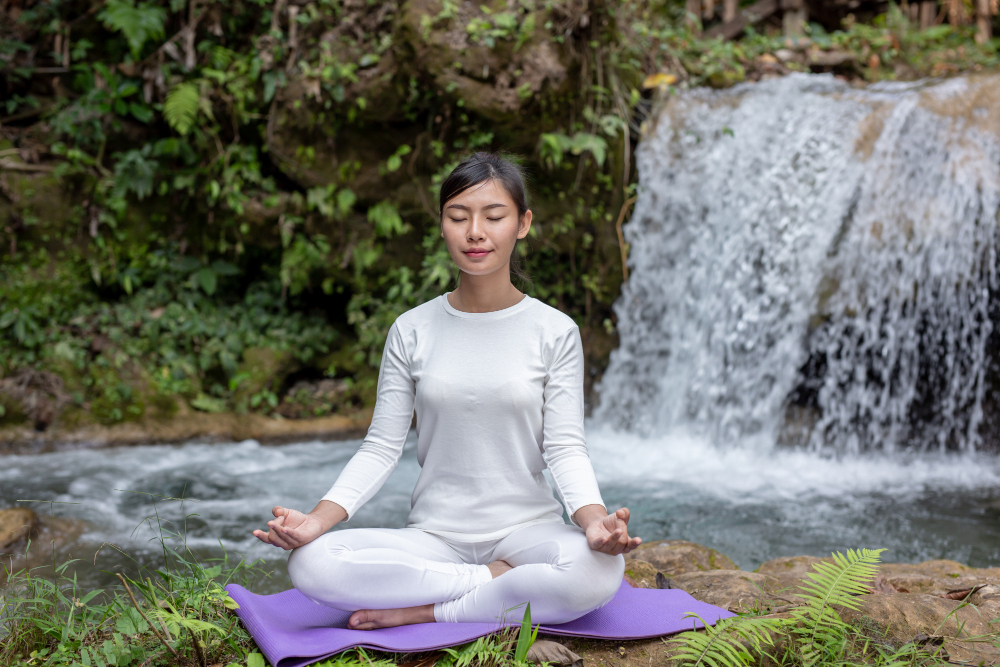
During the Adi Yoga Shala Himalayan yoga retreat, meditation is experienced alongside yoga, breathwork, mantra, and other contemplative practices.
Himalayan meditation encourages you to become more aware of what is happening within rather than constantly reacting to what is happening around you.
Tibetan mantra chanting introduces another dimension to that experience. Instead of understanding meditation only as sitting silently, you encounter traditions in which sound, repetition, breath, and focused awareness can become forms of meditation themselves.
And because these practices take place in Nepal, they have a context.
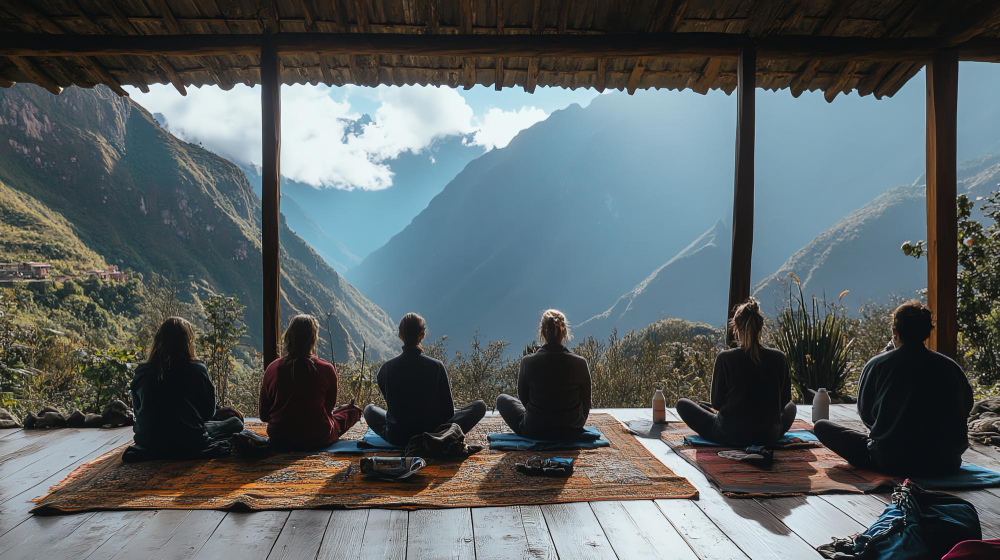
Visits to Buddhist monasteries and sacred spaces allow you to encounter traditions beyond the yoga mat and understand how contemplative practice exists within Himalayan culture.
The goal isn’t to become an expert meditator in eight days.
It is to discover practices you can realistically take home.
3. You Rediscover Your Body Through Different Forms of Yoga
Not every day calls for the same kind of practice.
Sometimes the body needs movement and strength. Sometimes it needs stillness. And sometimes the most valuable thing you can do is stop trying and simply rest.
That is why the retreat explores different yogic practices rather than treating yoga as a single style.
Hatha Yoga brings attention to posture, alignment, breath, and mindful movement.
Kundalini Yoga explores breath, awareness, energy, and meditative practices.
Yin Yoga invites you to slow down and remain with postures for longer, creating space for stillness and introspection.
Yoga Nidra takes you into deep guided relaxation, allowing the body to rest while awareness remains present.
Together, these practices make the retreat about more than flexibility or physical exercise.
You begin to understand yoga as it was intended: a practice involving the body, breath, mind, and awareness.
For beginners, this variety provides an opportunity to discover what resonates. For experienced practitioners, it can offer a chance to move beyond familiar routines and approach yoga from another perspective.
4. You Encounter Himalayan and Tibetan Spiritual Traditions
One of the most meaningful parts of a Nepal yoga retreat happens away from the yoga mat.
Nepal gives you the opportunity to experience spiritual traditions within the places where they continue to be practiced.
In Kathmandu, sacred temples, Buddhist stupas, monasteries, prayer wheels, incense, and mantra are part of the living landscape.
Rather than treating monastery visits as sightseeing stops, the retreat invites you to approach these places with awareness and curiosity.
You may hear Tibetan Buddhist chanting within a monastery, encounter mantra practice, visit sacred temples, and learn more about the philosophies behind practices you have experienced during the retreat.
These moments help connect yoga and meditation to something larger than a wellness routine.
They remind us that these practices come from traditions developed through generations of inquiry into the mind, consciousness, suffering, compassion, and inner peace.
For many participants, understanding that context changes the way they approach yoga altogether.
5. Small Groups Create Space for a More Personal Experience
A spiritual retreat should not feel like moving through a schedule with dozens of strangers.
Adi Yoga Shala intentionally keeps the retreat experience intimate.
Smaller groups create more opportunities for personal guidance during yoga and meditation while also allowing participants to experience the journey at their own pace.
They also change the atmosphere outside practice.
Meals become conversations. Shared experiences become meaningful connections. There is space to ask questions, reflect, and also spend time quietly when you need it.
You are not expected to arrive as an experienced yogi or meditator.
A good retreat meets you where you are.
Whether this is your first experience of yoga and meditation or you already have an established practice, the intention is not competition or performance.
It is presence.
6. Kathmandu and Pokhara Become Part of the Practice
Nepal is not simply the location of this retreat. It is part of the experience.
The journey through Kathmandu and Pokhara offers two very different sides of the country.
Kathmandu brings you closer to Nepal’s spiritual and cultural heritage. Ancient temples, Buddhist monasteries, sacred sites, prayer flags, and centuries of tradition surround you.
Then the rhythm changes in Pokhara.
Set beneath the Himalayas and beside Phewa Lake, Pokhara naturally invites a slower pace.
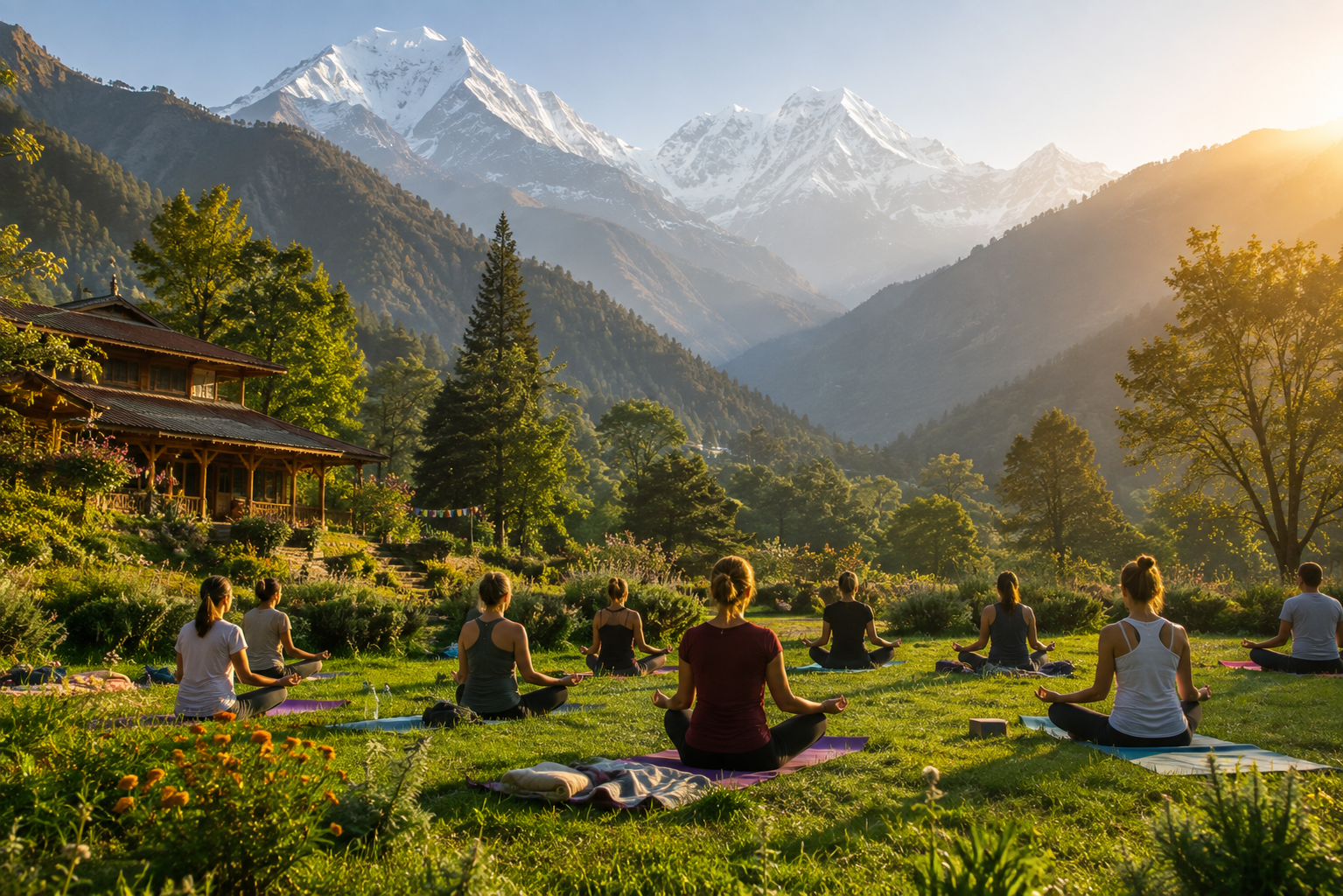
Imagine beginning the day with yoga and meditation as the mountains emerge in the morning light. Later, you might move into a quieter Yin practice, experience sound healing, or settle into Yoga Nidra after a day of exploration and reflection.
The mountains are not merely scenery for photographs.
The silence, scale, and beauty of the Himalayan landscape can remind you how rarely you allow yourself to simply be still.
That is why a Pokhara yoga retreat can feel very different from practicing the same postures at home.
Your environment becomes part of your practice.
7. You Return Home With More Than Memories
A meaningful retreat is not successful because you feel peaceful for eight days.
Its real value becomes apparent when you return to ordinary life.
The emails will still be there.
Work will still become demanding.
There will still be traffic, deadlines, responsibilities, and difficult days.
But your relationship with those things may begin to change.
You return with practices you can use when life becomes overwhelming: conscious breathing, meditation, gentle yoga, Yoga Nidra, mantra, and the ability to notice your reactions before automatically following them.
Perhaps you create a ten-minute morning meditation practice.
Perhaps you use a breathing technique before a stressful meeting.
Perhaps you learn that resting doesn’t always mean scrolling through your phone.
Or perhaps the biggest change is simply recognizing when you need to slow down.
A wellness retreat in Nepal cannot remove stress from your life.
What it can do is give you different ways to meet it.
What Does the Adi Yoga Shala Nepal Retreat Actually Feel Like?
No two days need to feel exactly the same.
Some mornings may begin in stillness with meditation before moving into yoga and breathwork.
Other moments take you beyond formal practice and into Nepal itself: visiting Buddhist monasteries, experiencing Tibetan Buddhist culture, exploring sacred temples, listening to mantra chanting, and spending time within landscapes shaped by the Himalayas.
The retreat brings together experiences such as:
- Hatha Yoga
- Kundalini Yoga
- Yin Yoga
- Yoga Nidra
- Himalayan meditation
- Tibetan mantra chanting
- Sound healing
- Buddhist monasteries and philosophy
- Sacred temples
- Kathmandu’s spiritual heritage
- Pokhara and the Himalayan landscape
- Small-group practice and personal reflection
These are not separate activities added to fill an itinerary.
Together, they create a journey from movement towards stillness, from external stimulation towards inner awareness, and from simply visiting Nepal towards experiencing something of its spiritual character.
How Does Disconnecting Help You Reconnect?
Modern life rarely gives us complete silence.
Even when we’re physically alone, our attention is often somewhere else—inside messages, social media, emails, news, or the next task waiting to be completed.
A retreat creates an opportunity to change that relationship with constant stimulation.
When you spend less time looking outward, you naturally begin noticing what is happening inward.
Thoughts you have been avoiding become clearer.
Patterns become easier to recognize.
You notice how your body responds to stress.
You may even rediscover how it feels to sit quietly without needing to fill every moment.
That is the deeper purpose of disconnecting.
It isn’t about rejecting technology or escaping modern life. It is about creating enough space to hear yourself again.
Why Are More People Choosing Nepal Meditation Retreat?
For many people, holidays are another form of stimulation.
We travel quickly, fill every day with activities, take hundreds of photographs, and sometimes return home needing another holiday.
A yoga holiday in Nepal offers something different.
Instead of asking, “How much can I see?”, the experience asks, “How deeply can I experience where I am?”
There is still exploration.
There is still culture.
There are still extraordinary landscapes.
But these experiences are balanced with meditation, movement, silence, rest, reflection, and spiritual practice.
You don’t need to return home with a longer list of places you’ve visited.
You can return to knowing yourself a little better.
Frequently Asked Questions About a Nepal Meditation Retreat
Is the Nepal retreat suitable for complete beginners?
Yes. You do not need an established yoga or meditation practice to benefit from the retreat. The different practices can be approached according to your experience and comfort level, making the journey accessible to beginners while still meaningful for experienced practitioners.
How long is the Adi Yoga Shala Nepal retreat?
The Adi Yoga Shala Nepal retreat is an 8-day immersive journey through Kathmandu and Pokhara, combining yoga, meditation, Himalayan spiritual traditions, cultural experiences, and time for reflection.
What styles of yoga are included?
The retreat incorporates Hatha Yoga, Kundalini Yoga, Yin Yoga, and Yoga Nidra, allowing participants to experience both active and restorative approaches to yoga.
What meditation and spiritual practices can I experience?
The journey includes Himalayan meditation, Tibetan mantra chanting, sound healing, monastery experiences, and opportunities to explore Buddhist and yogic philosophy alongside physical yoga practice.
Is Nepal known for meditation and spirituality?
Yes. Nepal has deep connections with both Hindu and Buddhist traditions and has been home to temples, monasteries, pilgrims, monks, yogis, and spiritual practitioners for centuries.
Practicing here allows you to encounter meditation within a culture where contemplative and devotional traditions remain part of everyday life.
Do I need to be flexible or experienced in yoga?
No.
A retreat is not a test of how deeply you can enter a posture. Yoga is practiced according to your own body and experience.
Beginners can learn foundational practices, while those with more experience have the opportunity to deepen their awareness and explore different traditions.
How should I prepare for the retreat?
You don’t need to dramatically change your lifestyle before arriving.
If you want to prepare, begin with a few minutes of quiet meditation each day, reduce unnecessary screen time, and become more conscious of your sleep and daily routine.
For the journey itself, bring comfortable clothes for yoga and meditation, layers suitable for changing temperatures, and perhaps a journal if you enjoy writing and reflection.
Most importantly, arrive curious rather than expecting yourself to already know how to meditate or practice perfectly.
More Than a Yoga Holiday in Nepal
You can visit Nepal for its mountains.
You can come for its temples, lakes, monasteries, food, culture, and extraordinary landscapes.
But you can also come to experience what happens when you stop rushing through all of them.
Whispers of the Himalayas, an 8-day Nepal meditation retreat, is designed as a spiritual journey through Kathmandu and Pokhara, bringing together Hatha Yoga, Kundalini Yoga, Yin Yoga, Yoga Nidra, Himalayan meditation, Tibetan mantra chanting, sound healing, Buddhist traditions, sacred places, and the quiet presence of the Himalayas.
It is not about escaping your life.
It is about creating enough distance from your usual rhythm to see it more clearly.
If you are searching for more than a holiday—something that combines yoga, meditation, Himalayan spirituality, meaningful cultural experiences, and genuine time for yourself—this journey offers an opportunity to experience Nepal differently.
And perhaps return home differently, too.
Explore Whispers of the Himalayas and discover an 8-day journey through yoga, meditation, Kathmandu, Pokhara, and the spiritual traditions of the Himalayas.

Leave a Reply